
Unsupported Apps on macOS: What to Do When Your Favorite App Stops Working

Unsupported Apps on macOS
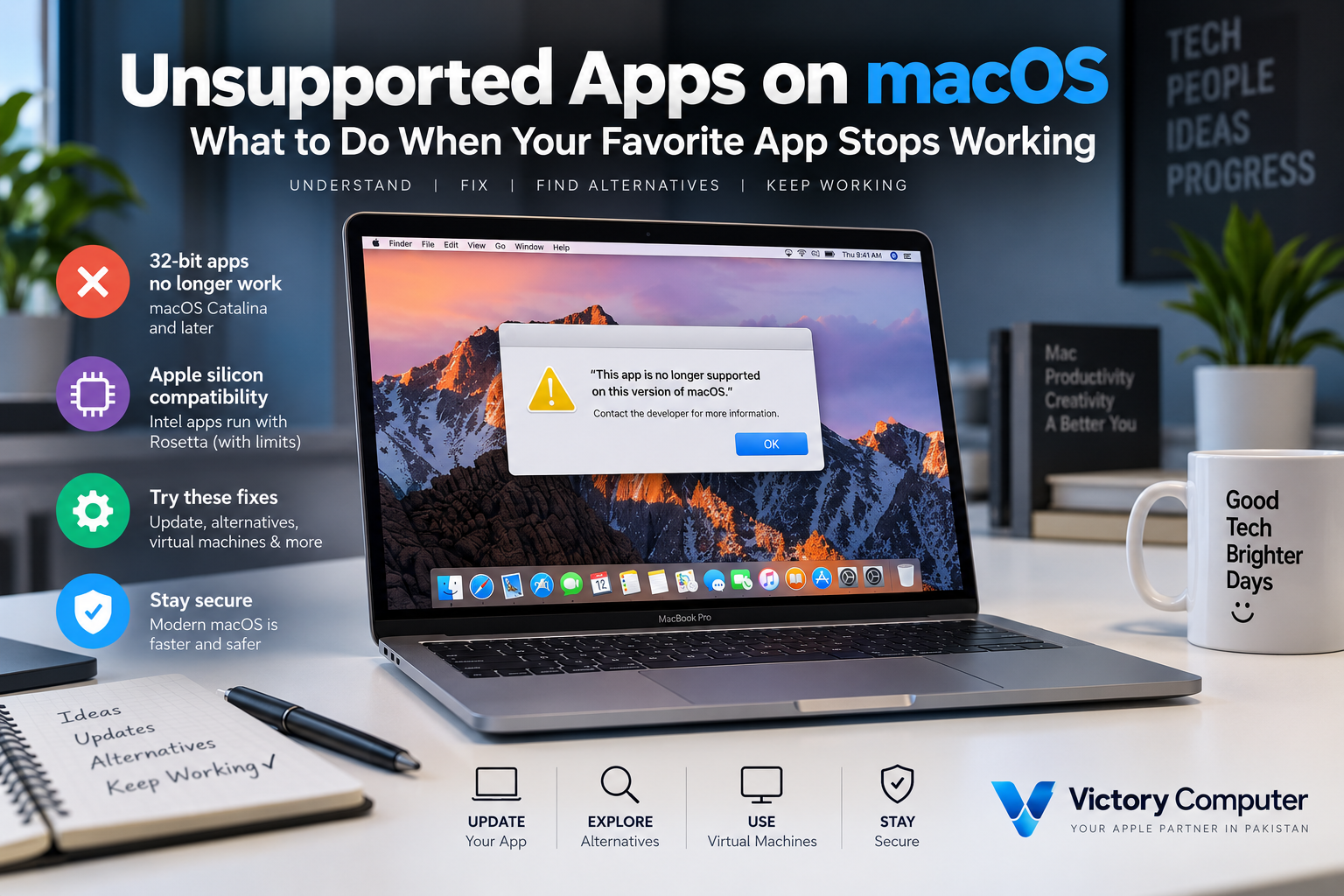
Unsupported Apps on macOS usually stop working because the software is 32-bit, has not been updated for a newer macOS release, depends on outdated components, or is incompatible with Apple silicon. Before deleting the app, check for an update, identify whether it is Intel or Apple silicon software, and look for a supported alternative or virtualization option.
Why Do Apps Become Unsupported on macOS?
Unsupported Apps on macOS are not caused by one compatibility issue. An application can stop launching after a macOS upgrade because its architecture, security requirements, plug-ins, drivers or underlying frameworks are no longer compatible with the operating system.
Common causes include:
- The application is 32-bit and cannot run on macOS Catalina 10.15 or later.
- An older Intel application or one of its components has compatibility problems on Apple silicon.
- The developer has discontinued the application and no longer releases macOS updates.
- An old plug-in, driver, extension or installer is incompatible even though the main application has been updated.
- macOS security features block software that cannot satisfy current signing or notarization requirements.
- A major macOS update changes frameworks or system behavior on which older software depends.
The error message matters. “The developer needs to update this app,” “developer cannot be verified,” and an application that crashes after launch can indicate very different problems.
Why 32-Bit Mac Apps No Longer Work
Apple ended native support for 32-bit Mac applications with macOS Catalina 10.15. macOS Mojave 10.14 was the last macOS release capable of running 32-bit applications.
This means a genuinely 32-bit application cannot simply be made compatible by changing a Privacy & Security setting. The developer needs to provide a compatible version, or the user needs another environment capable of running the legacy software.
For a deeper explanation of the transition, read our 32-bit vs 64-bit Mac apps guide.
Apple’s official explanation is also available in its 32-bit app compatibility documentation.
Apple Silicon, Intel Apps and Rosetta
Intel software presents a different problem from 32-bit software. Many 64-bit Intel applications can run on Apple silicon Macs through Rosetta, Apple’s translation technology.
Rosetta does not make every old Mac application compatible. An application may still depend on unsupported drivers, plug-ins, extensions or other components. Users should therefore look for a Universal or native Apple silicon version whenever the developer provides one.
Apple states that Rosetta remains available through macOS 27. Beginning with macOS 28, Rosetta functionality is planned to become much more limited, mainly retaining support for certain older unmaintained games that depend on Intel frameworks. Users who still depend on Intel-only professional software should therefore start checking for native replacements or updates.
See Apple’s current Rosetta guidance or our guide to workarounds for unsupported apps on Apple silicon Macs.
7 Things to Do When Your Favorite Mac App Stops Working
1. Check for an Updated Version
Start with the developer’s official website or the Mac App Store. A newer release may support your current macOS version or provide native Apple silicon compatibility.
2. Identify Whether the App Is Intel or Apple Silicon
In Finder, select the application and choose File > Get Info. On Apple silicon Macs, the Kind field can identify an application as Intel, Universal or Apple silicon.
A Universal application supports both Intel and Apple silicon. An Intel application may currently rely on Rosetta.
3. Check Plug-ins and Extensions
Sometimes the application itself is compatible but an old plug-in, extension, driver or helper component is not. This is particularly relevant to audio production, video editing, specialist hardware and other professional workflows.
Update third-party components individually before assuming the entire application is unsupported.
4. Understand macOS Security Warnings
A security warning does not necessarily mean the application is technically incompatible. Gatekeeper checks downloaded software and macOS Catalina and later use notarization requirements as part of Apple’s software security protections.
If macOS reports that the developer cannot be verified, first look for an updated or properly signed release. Apple does provide an Open Anyway option for certain trusted applications, but overriding security protection should not be treated as a general compatibility fix.
Apple explains these warnings in its Mac app security guidance.
5. Find a Modern Alternative
If the developer has abandoned an application, replacing it is often the most sustainable solution. Look for software that actively supports your current macOS version and, on newer Macs, Apple silicon.
Replacing abandoned software also reduces dependence on old frameworks and unsupported components.
6. Consider Virtualization for Essential Legacy Software
Virtualization can be useful when an old application is essential to a business, study or professional workflow. The exact solution depends on the Mac model, operating system required and application architecture.
Our guide to virtual machines for unsupported Mac apps explains this route in more detail.
Virtualization should not be assumed to solve every compatibility problem. Hardware drivers, graphics requirements, licensing systems and architecture differences can still prevent an application from working.
7. Check Compatibility Before the Next macOS Upgrade
If you depend on specialist software, check compatibility before installing a major macOS upgrade. Review the application’s developer documentation, plug-ins, hardware drivers and other dependencies first.
This is particularly important for professional systems where one unsupported application can interrupt an entire workflow.
Pros and Cons of Modern macOS App Compatibility Changes
| Pros | Cons |
|---|---|
| Moves users and developers toward modern application architectures | Legacy 32-bit applications cannot run on current macOS releases |
| Encourages developers to maintain current Mac versions | Older paid software may need to be upgraded or replaced |
| Apple silicon-native apps can take advantage of current Mac hardware | Some Intel-only applications, plug-ins and drivers can create compatibility problems |
| Current signing and notarization requirements strengthen software security checks | Specialist legacy workflows can become difficult to preserve |
| Reduces long-term dependence on obsolete software components | Virtualization or a separate legacy computer may sometimes be required |
Why We Recommend Updating Where Possible
For most users facing Unsupported Apps on macOS, moving to a maintained version or supported alternative is preferable to building a workflow around obsolete software. Users who depend on specialist legacy applications should be more cautious and verify the complete software environment before upgrading macOS or replacing an older Intel Mac.
Should You Upgrade macOS If You Depend on Older Apps?
Do not install a major macOS upgrade until you have confirmed that your essential applications, plug-ins and hardware drivers support it. Compatibility is more important than having the newest operating system on day one when a Mac is used for professional work.
Users researching older compatibility issues can also see our guide to apps broken on macOS Sonoma. Keep in mind that compatibility changes over time, so the application’s current developer documentation should remain the final check.
What If Your Mac Is Too Old for Your Current Workflow?
Sometimes the problem is broader than one application. An older Mac may no longer support the macOS release or software versions required for a current workflow, while a newer Mac may not be suitable for a critical legacy application.
Before replacing a computer, list the applications and peripherals you must keep. Check each one for current macOS and Apple silicon compatibility. That approach is safer than buying a new Mac first and discovering afterward that essential legacy software no longer works.
If you are comparing laptops or need help choosing hardware for a modern workflow in Pakistan, you can browse Victory Computer or contact the team on WhatsApp at 0300 9466881.
Frequently Asked Questions
Why is an app suddenly unsupported on my Mac?
A macOS update, discontinued developer support, incompatible plug-in, security requirement or processor-architecture change can cause an application to stop working. Check the exact error message before choosing a fix.
Can modern macOS versions run 32-bit apps?
No. Apple ended 32-bit application compatibility beginning with macOS Catalina 10.15. macOS Mojave 10.14 was the last macOS release to run 32-bit Mac applications.
Can Rosetta run unsupported Mac apps?
Rosetta can translate many compatible Intel-based applications on Apple silicon, but it does not restore 32-bit support or guarantee that old plug-ins, drivers and extensions will work.
Is it safe to use Open Anyway for a blocked Mac app?
Only consider overriding the warning when you are confident the application came from a trustworthy source and has not been tampered with. An updated, signed and supported version is preferable.
Should I update macOS immediately?
Not if your work depends on specialist applications, plug-ins or hardware. Confirm compatibility with your essential software and peripherals before installing a major macOS release.
What is the best solution for Unsupported Apps on macOS?
Updating to a maintained native version is usually the best long-term solution. If no update exists, consider a supported alternative, Rosetta for compatible Intel software, or an appropriate legacy/virtualized environment for essential older applications.
4 thoughts on “Unsupported Apps on macOS: What to Do When Your Favorite App Stops Working”